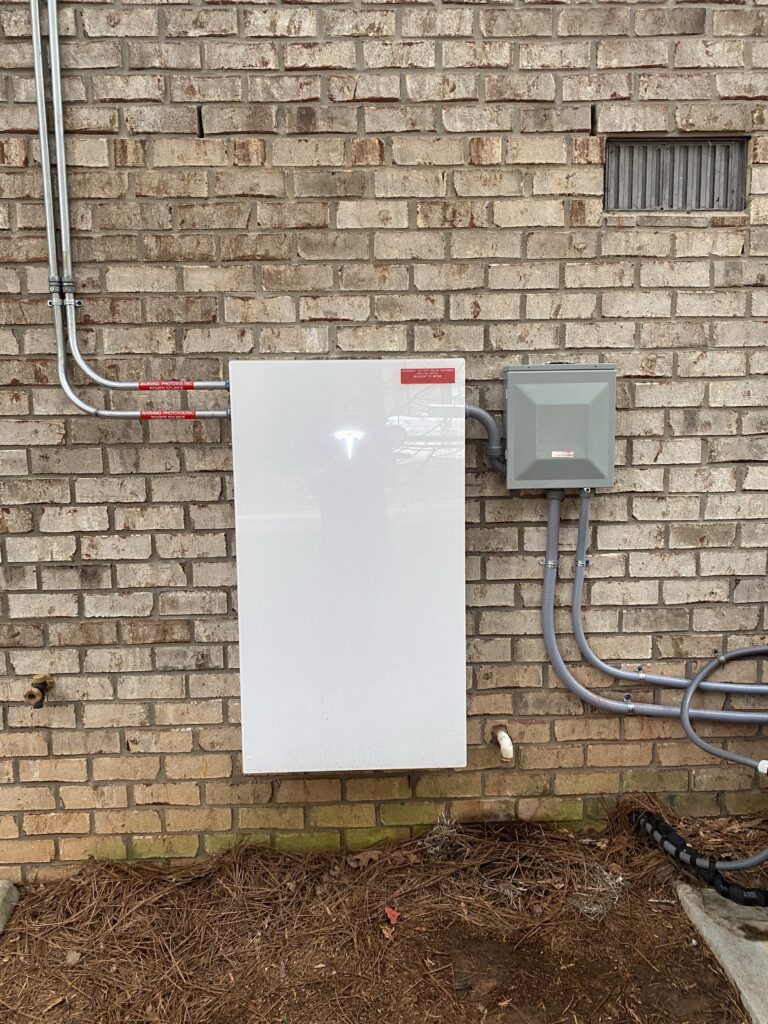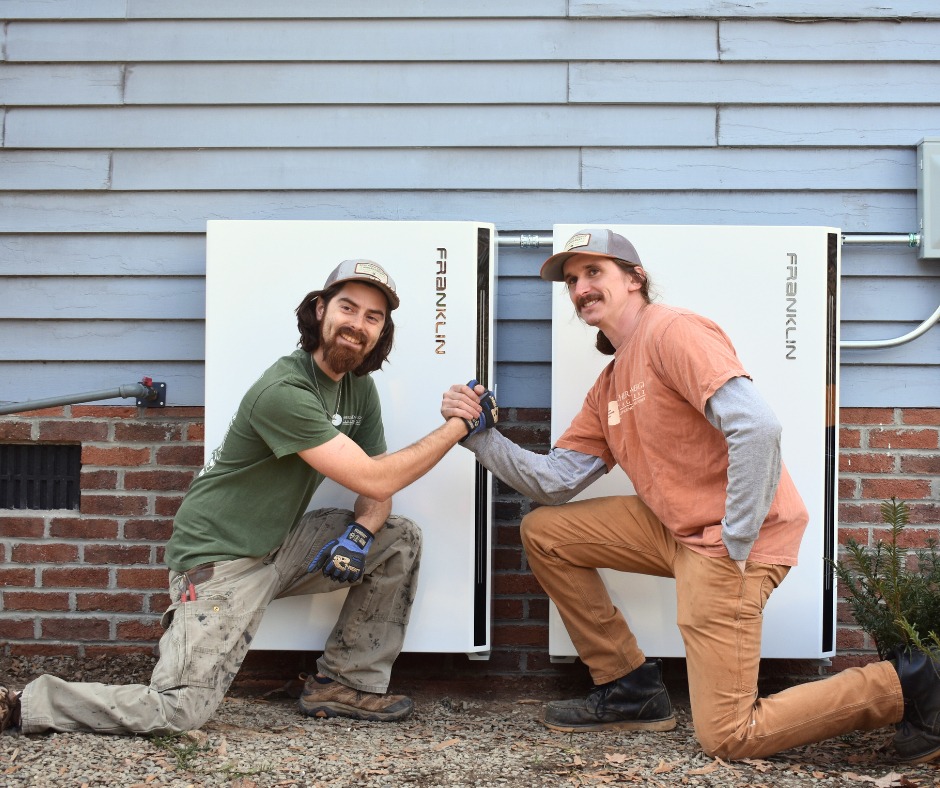

Choosing between the FranklinWH aPower 2 and Tesla Powerwall 3 is a big decision many of our customers face when adding battery storage to their solar system in 2026. Both are lithium-ion home batteries designed to provide backup power, store solar energy, and help you manage electricity costs. The most important differences are less about whether either battery is “good” and more about:
- How much backup power you need
- Which loads you want to run during an outage
- How you want to integrate the system with other energy sources
- How much you want to spend
For many homeowners, the clearest way to think about the FranklinWH battery vs. Tesla Powerwall decision is backup requirements. If you need to run high-amp loads like well and septic pumps, or want one battery to handle several large loads, FranklinWH’s Smart Circuit and load-shedding capabilities make it the stronger choice. If you primarily want to back up essentials, want to control upfront costs, or already use Tesla products, Powerwall 3 can be a compelling fit.
At Southern Energy, we install and design both FranklinWH and Tesla battery systems. Here’s what to know about comparing the two platforms using current 2026 product information, pricing information, and manufacturer specs.


Essential vs. Extended Coverage: What These Terms Mean
You’ll often see batteries marketed for “whole-home backup” or “partial-home backup,” but that label can be misleading. Whether a battery can run your entire home depends on more than the product itself. What you’re powering, your battery count, whether it’s being replenished by solar power, and how the system is configured are some of the important determining factors. Throughout this guide, we use two more precise terms:
Essential coverage keeps your most important circuits running during an outage: refrigerator, lights, internet, and basic outlets.
Extended coverage goes further, supporting larger loads such as HVAC, well and septic pumps, electric water heating, pool equipment, or EV charging. Extended coverage typically requires more capacity, more power output, load management, or a combination of all three.
Who Makes Franklin Batteries?
FranklinWH is the team behind the aPower2 and aPowerS batteries. Founded in 2019, their work is focused in residential energy-storage and home-energy-management. The company is headquartered in San Jose, California and positions their systems as more than a standalone battery. Its dedicated energy-management architecture is designed to coordinate multiple energy sources, such as generators, which is one of the company’s main differentiators from conventional battery-storage systems. We’ve found that FranklinWH’s customer service team to be very responsive and supportive when needed, providing our customers extra peace of mind.

FranklinWH aPower2 vs Tesla Powerwall 3: Full Spec Comparison
Here is a side-by-side look between the FranklinWH aPower2 and the Tesla Powerwall 3:
| Specification | FranklinWH aPower2 | Tesla Powerwall 3 |
|---|---|---|
| Usable Energy Capacity | 15 kWh | 13.5 kWh |
| Continuous Power | 10 kW | 11.5kW |
| Battery Stacking | Up to 15 aPower2 units per aGate | Up to 3 expansion units per Powerwall 3 |
| Battery Chemistry | LFP | LFP |
| Inverter | Integrated solar inverter with the aPowerS, otherwise separate with the aPower2 (AC-coupled through aGate) | Integrated solar inverter |
| Installation | Indoor/outdoor | Indoor/outdoor |
| Dimensions | 45.2″ H × 29.5″ W × 11.8″ D | 43.5″ H × 24″ W × 7.6″ D |
| Weight | 357 lb. | 287 lb. |
| Warranty | 15 years / 60 MWH throughput | 10 years |
| Capacity Retention | 70% at 15 years | 70% at 10 years |
| Smart Load Management | Smart Circuits (up to 3 circuits) | Eaton AbleEdge Compatible |
| Vehicle and Generator Integration | Generators and Compatible EVs using 240V outlet | Tesla Cybertruck and New Tesla Model 3 / Model Y vehicles ordered after October 1, 2026 |
| Energy Management | FranklinWH App | Tesla App for Energy |
| Leasing Availability | Not currently available; approval in progress | Available |
Is the Franklin Battery Better Than Tesla Powerwall 3?
So, what does this all mean? Is the Tesla Powerwall 3 better than the FranklinWH aPower 2 battery? There isn’t one universal winner because the right battery depends on what you want your system to accomplish. The best recommendation always starts with your goals, whether that’s staying within a budget or keeping high-amp loads running. Here’s how those priorities map to each system:
| Priority | System That May Fit Best |
|---|---|
| Keep high-amp loads running, such as well and septic pumps | FranklinWH aPower 2 |
| Extended coverage, including HVAC, electric heat, or several large loads | FranklinWH, particularly where load shedding is important |
| More granular circuit control during outages | FranklinWH aPower 2 with Smart Circuits |
| Extend outage duration with a generator or EV | FranklinWH aPower 2 |
| Longest stated battery warranty | FranklinWH aPower 2 |
| Essential coverage at the lowest starting cost | Tesla Powerwall 3 |
| Budget-conscious partial-home backup | Tesla Powerwall 3 |
| Already invested in Tesla products or own a Cybertruck | Tesla Powerwall 3 may simplify the ecosystem |
| Leasing-focused project | Tesla Powerwall 3 |
FranklinWH is particularly well suited if you need substantial backup capability from a single battery and have demanding energy loads to manage. The aPower 2’s 15 kWh capacity, 10 kW continuous output, surge capability, and optional Smart Circuits make it easier to design a system around high-amp equipment like well and septic pumps.
Tesla’s Powerwall 3 is a practical, cost-effective choice if your goal is essential coverage or partial-home backup on a budget. Adding a Powerwall 3 expansion unit increases capacity without the cost of a second full system, and the integrated inverter simplifies the system setup. Tesla also has a long term presence in the market as one of the industry’s biggest names and a leader in product development. We installed our first Powerwall in 2017, and have installed nearly 2,000 Powerwalls since then. Their ecosystem of products is also a notable benefit, with the Powerwall 3 gaining more integrations with other Tesla products throughout the years, such as Starlink and new Tesla vehicle models.
Both systems provide similar energy management features, including solar monitoring, storm preparation, time-of-use functionality, and remote battery control.
The bigger difference is how that intelligence interacts with the physical system. FranklinWH’s open architecture works with generators and any EV equipped with a 240V outlet, which can extend how long your home stays powered during a long outage. Tesla’s vehicle-to-home functionality is limited to specific Tesla vehicles with compatible Tesla equipment.
Let’s dive deeper:
Smart Energy Management and Software Features
Both batteries have a sophisticated energy management app that can coordinate solar, grid power, battery storage, and electric vehicles. Features like setting the battery’s backup reserve, seeing solar production, configuring utility rate plans including Time-of-Use management, Storm protection mode, off-grid mode, and Virtual Power Plant participation are standard between the two.
For Tesla users, Storm Watch automatically prepares Powerwall for severe weather by charging the battery in anticipation of an outage when the feature is enabled. FranklinWH customers have a similar featured called Storm Hedge which utilizes National Weather Service notifications to prepare the battery for weather events.
Where it gets interesting for FranklinWH users is the addition of Smart Circuits, an optional system that allows up to three designated circuits to be independently controlled through the app. Most of our customers align their Smart Circuits with the highest energy loads they want to have backup control over. Homeowners can then schedule or manually toggle those circuits and set state-of-charge thresholds that automatically shed designated loads when battery reserves fall. This is particularly useful for high-amp loads such as well and septic pumps, air conditioners, pool pumps, or EV chargers, where controlling what runs and when can make the difference between a battery that lasts through an outage and one that doesn’t.
While both apps offer similar everyday functions, FranklinWH’s Smart Circuits are a meaningful difference that help homeowners reach extended coverage beyond the essentials.
Warranty, Lifespan, and Long-Term Reliability
Warranty terms are another clear difference between the two products. The FranklinWH aPower 2 has a 15-year warranty or 60 MWh of aggregate throughput with 70% capacity retention, subject to the warranty’s terms and conditions. Tesla’s Powerwall warranty provides 10 years of coverage and specifies the same 70% energy retention at the end of the 10-year period. In other words, Franklin guarantees the same capacity threshold for five additional years.
That doesn’t mean a battery necessarily stops working when its warranty expires, though. Actual service life depends on factors like cycling, temperature, charging and discharging patterns, and system management. At Southern Energy, we provide solar repair and maintenance services when you want continued support for your energy system.
Franklin Battery vs Tesla Powerwall Price Breakdown
There’s no single nationwide installed price for either battery because equipment configuration, electrical work, permitting, solar integration, utility requirements, and site conditions all affect the final project.
However, you can generally expect to pay approximately $17,000 to $19,000 per Franklin solar battery when installed with a new solar system, depending on configuration, and around $15,000 to $17,000 for a Tesla Powerwall 3, again depending on whether it’s installed with new solar or added to an existing system.
These figures should be treated as planning ranges rather than quotes. Your home’s electrical configuration and backup goals can change the Franklin battery vs Tesla Powerwall price for your home. The best way to get a clear picture around cost is to reach out for a free solar & battery assessment. Our solar designers will walk through your energy goals to determine a system that maximizes performance vs value in your specific situation.
Why Franklin Costs More
For homeowners comparing the two, the price difference reflects more than hardware. FranklinWH’s longer warranty (15 years vs. 10), its load-shedding capabilities for high-amp circuits, and its ability to work with generators and EVs all add long-term value. Combined with reliable local installation and ongoing support from Southern Energy, many homeowners find the premium worthwhile, especially when their home depends on well pumps, septic systems, or other demanding loads during an outage.
Tax Credits and Incentives in 2026
Important Note: The 30% Federal Residential Clean Energy Tax Credit is no longer available for residential systems after December 31, 2025. If you are a commercial property owner, you have until December 31, 2027 to install a system and claim the credit.
For eligible Duke Energy Carolinas customers in North Carolina, PowerPair can provide an important incentive opportunity if you’re considering a new solar-plus-battery system. This solar-plus-storage incentive is worth up to $9,000, with eligibility and program capacity subject to utility requirements.
Duke Energy customers with a battery can also participate in the Virtual Power Plant (VPP) battery control program which provides an additional $52 monthly bill credit for Powerwall 3 users and up to $46 per month for FranklinWH users. Watch Alyssa’s Story: How Solar + FranklinWH aPower 2 Earns Rewards in Duke Energy’s VPP Program to learn more.
Leasing Availability
If you plan to lease rather than buy, Tesla Powerwall 3 is currently the only one of the two batteries approved for leasing in North Carolina. FranklinWH is actively pursuing lease approval, and we’ll update this guide as that changes.
How Southern Energy Installs Solar Panels and Battery Storage
Choosing a battery is only part of the project. The installation design determines which circuits are backed up, how the battery interacts with existing solar, whether electrical upgrades are needed, and how your system behaves during an outage.
At Southern Energy, we can design and install both FranklinWH and Tesla battery systems. The process includes evaluating your home’s energy consumption, identifying your backup priorities, assessing the existing electrical and solar equipment, designing your system to meet your energy goals, completing permitting and electrical work, and commissioning the battery.
If you have existing solar, both the FranklinWH aPower 2 and Tesla Powerwall 3 can be compatible. The design needs to account for the existing inverter, system production, electrical configuration, and desired backup operation. In some cases, we can also rewire your existing panels into a new inverter during installation, such as Powerwall 3’s integrated inverter, which can be a good option if your current inverter is aging.
Our home solar services connect the solar, storage, electrical, and monitoring portions of your project rather than treating the battery as an isolated appliance.

Get a Custom Battery Quote from Southern Energy
Before a consultation, think about your backup priorities. Do you want essential coverage for your refrigerator, lights, internet, and basic outlets? Or do you need extended coverage for HVAC, well or septic pumps, electric water heating, pool equipment, or EV charging? Your goals can substantially affect system sizing and which battery makes sense.
It’s also helpful to download 12 months of electricity bills or energy-use data from your utility, which gives us a better picture of seasonal consumption and helps determine how much storage makes sense for your home.
In general, one FranklinWH aPower 2 can provide essential coverage while also supporting larger loads through load shedding, and a single Powerwall 3 can similarly cover essential loads, while expansion units can offer extended coverage.
Ready to get started? Request a free solar and battery consultation from us at Southern Energy today.
FAQs
Is the Franklin aPower2 battery any good for whole-home backup?
“Whole-home backup” is a misleading term, since what any battery can power depends on your loads and configuration. The aPower 2 is well suited to cover large loads and extended use of lights and outlets. With 15 kWh of usable AC energy and 10 kW of continuous output per battery, plus Smart Circuits to shed high-amp loads like well and septic pumps or large air-conditioning systems when reserves run low. Additional aPower 2 units can increase coverage further.
What is the price difference between a Franklin battery and a Tesla Powerwall 3 in 2026?
The price range is approximately $17,000 to $19,000 for a FranklinWH aPower 2 installed with new solar and approximately $15,000 to $17,000 for a Tesla Powerwall 3, depending on configuration, and actual quotes vary. Franklin’s premium reflects its longer warranty, load-shedding capability, and generator and EV compatibility.
Who makes Franklin batteries and where are they manufactured?
FranklinWH Energy Storage Inc. manufactures the FranklinWH System and is headquartered in San Jose, California, with batteries currently made overseas and production moving to a Texas facility in the near future.
Is the Tesla Powerwall 3 better than the FranklinWH aPower 2 battery?
If you need to power high-amp loads like well and septic pumps, want extended coverage from one battery, or want more granular circuit management, FranklinWH may align better. For essential coverage, budget-conscious essential load backup, a Tesla-centered home, or a leased system, Powerwall 3 may be a better fit.
Can I pair a Franklin or Tesla battery with existing solar panels?
Yes, both systems are compatible with existing solar installations. The existing system’s age, inverter compatibility, production, electrical equipment, and current condition need to be evaluated first, and in some cases your panels can be rewired into a new inverter during installation.
Can I lease a Franklin or Tesla battery?
Tesla Powerwall 3 is currently the only one of the two approved for leasing in North Carolina. FranklinWH is pursuing lease approval.
How many Franklin or Tesla batteries do I need for my home?
One FranklinWH battery can provide essential coverage while supporting larger circuits through load shedding, and one Tesla Powerwall can provide essential coverage, while Expansion units can increase capacity and coverage. A solar designer can calculate what you need from your actual energy-use data and backup priorities.
Find the Right Home Battery: Talk to Southern Energy Today
The FranklinWH aPower 2 and Tesla Powerwall 3 are both capable home-energy-storage platforms, but they approach backup power differently. The most useful question isn’t simply, “Which battery is better?” It’s “Which battery configuration matches my goals and the way my household uses electricity?”
If you need to keep high-amp loads like well and septic pumps running, or want extended coverage from one battery, FranklinWH’s higher load support with Smart Circuits make its architecture particularly relevant. If you mainly want essential coverage, prefer a lower-cost starting configuration, plan to lease, or already use Tesla products, Powerwall 3 may be a strong fit.
At Southern Energy, we can evaluate both options using your home’s energy usage, existing solar system, electrical configuration, budget, and backup priorities. Request your free solar and battery consultation from us today, and get a system designed around your home’s real energy needs.